
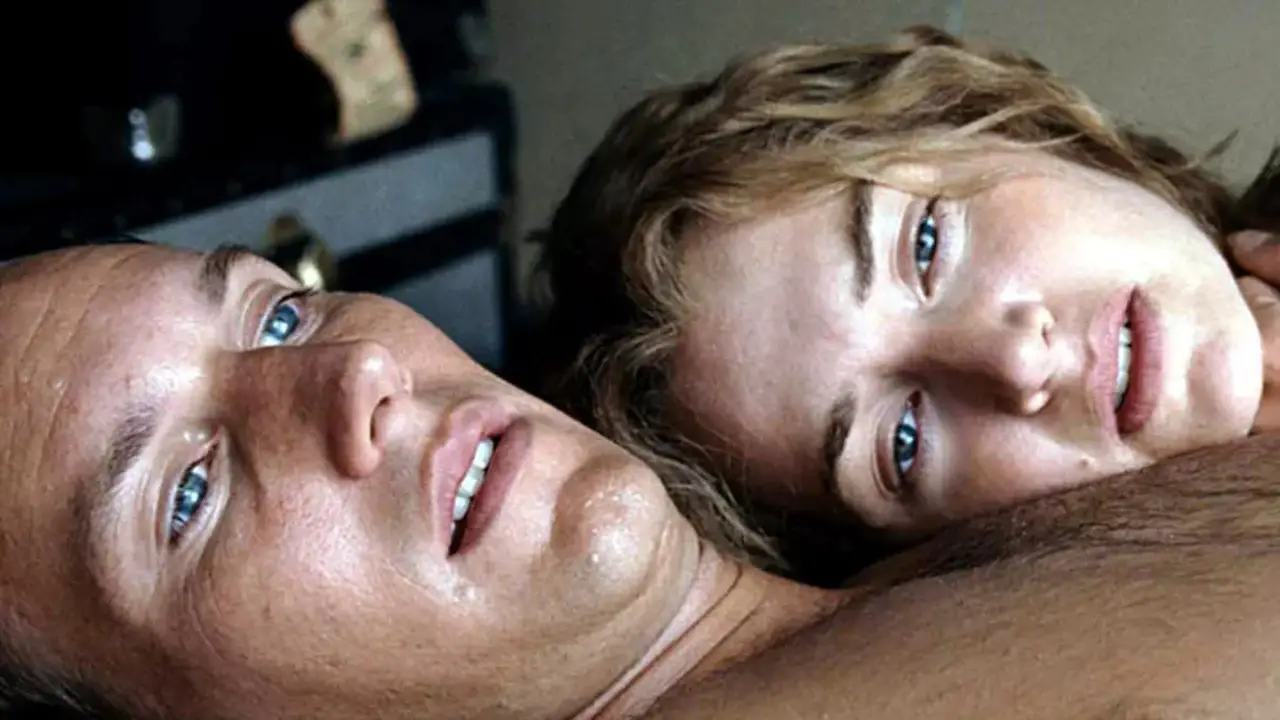
Kate Winslet’s Bruising Encounter: The Intense X-Rated Scene That Left Its Mark
In the 2006 film Little Children, Kate Winslet delivered a raw, Oscar-nominated performance as an unhappy housewife entangled in a passionate affair with her married neighbor, played by Patrick Wilson. While the movie earned critical acclaim, it was a particularly intense scene that left a lasting impression—and physical marks—on Winslet. The actress reportedly walked away with “lots of bruises” after filming a steamy, X-rated sequence that pushed boundaries and sparked conversation.
Set in suburban Boston, Little Children explores the complexities of desire, discontent, and infidelity. Though it didn’t dominate the box office, the film’s unflinching portrayal of human relationships garnered praise, including an Academy Award nomination for Winslet’s portrayal of Sarah Pierce. One scene, in particular, became infamous: a vigorous, clothes-shedding moment between Winslet and Wilson’s characters in a laundry room, where their mutual attraction explodes into a heated encounter.

Filmed long before the industry embraced intimacy coordinators—professionals who ensure actors’ safety and comfort during intimate scenes—the sequence was physically demanding. Winslet and Wilson, though covered with modesty garments off-camera, bared all emotionally and nearly physically. The result was a scene so memorable that Wilson later recounted receiving knowing glances from moms at playgrounds. “I’d see them get flustered, like, ‘Oh—that’s why I remember him,’” he shared on The Hollywood Reporter’s It Happened in Hollywood podcast. With a chuckle, he added, “I could just say, ‘Are you thinking about the laundry room scene right now?’”
Wilson praised Winslet’s professionalism, calling her “cool, gracious, and a gamer” who approached the scene with fearless commitment. “There was never one awkward or weird moment,” he recalled. Yet, the physical toll was undeniable. Addressing rumors about Winslet’s injuries, Wilson confirmed, “I’m sure there were lots of bruises.” He reflected on how the scene, shot pre-#MeToo, felt like a relic of a less regulated era. “I haven’t done a scene like that since post-#MeToo and intimacy coordinators,” he noted, admitting he felt “a little bit like a dinosaur” for having filmed such uninhibited love scenes.

Winslet herself corroborated the physical strain. At the time of the film’s release, she revealed, “My hips and backside really hurt the next day.” To prepare, the actors rehearsed the scene fully clothed with only director Todd Field present, mapping out the sequence to ensure mutual comfort. “We did look out for each other, and we laughed a hell of a lot,” Winslet said. “At a certain point, you forget that you’re naked with a relative stranger.” Their camaraderie helped navigate the vulnerability, but the absence of structured support left room for discomfort.
In recent years, Winslet has become a vocal advocate for intimacy coordinators, professionals who choreograph intimate scenes and advocate for actors’ boundaries. Speaking to The New York Times Magazine, she expressed regret that such support wasn’t available during her earlier career. “I would have benefited from an intimacy coordinator every single time I had to do a love scene, be partially naked, or even a kissing scene,” she said. “It would have been nice to have had someone in my corner because I always had to stand up for myself.”
Winslet shared how, as a young actress, she often felt powerless to voice concerns. “I don’t like that camera angle. I don’t want to stand here full-frontal nude. I don’t want this many people in the room. I want my dressing gown to be closer,” she cited as examples of objections she hesitated to raise. The fear of being labeled “difficult” loomed large. “When you’re young, you’re so afraid of pissing people off or coming across as rude or pathetic,” she explained. “Learning to have a voice in those environments was very, very hard.”

The evolution of on-set practices highlights a broader cultural shift. The #MeToo movement and the rise of intimacy coordinators have reshaped how Hollywood approaches sensitive scenes, prioritizing consent and safety. Winslet’s experience on Little Children underscores why such changes were necessary. While she and Wilson maintained a professional rapport, the physical and emotional demands of the scene—without a neutral advocate—left her vulnerable.
Little Children remains a compelling study of human fragility, with Winslet and Wilson’s chemistry anchoring its most provocative moments. The laundry room scene, though bruising, is a testament to their dedication. For viewers intrigued by the film’s raw intensity, it’s available to stream on platforms like Apple TV, Prime Video, and Sky Store. The trailer offers a glimpse into its simmering tension.
Winslet’s reflections also invite broader questions about the industry’s past and future. Her advocacy for intimacy coordinators signals a commitment to safer, more equitable sets—a cause she champions as both an actress and a producer. “Having someone to say, ‘Actually, we don’t need that extra angle’ or ‘Can you adjust this?’ would have made such a difference,” she noted. Her candor resonates with a new generation of actors who benefit from these protections.
The legacy of Little Children extends beyond its critical accolades. It’s a snapshot of a pre-#MeToo era, where actors like Winslet navigated high-stakes scenes with grit and grace, often at personal cost. The bruises she sustained were temporary, but her push for change is enduring. As Hollywood continues to evolve, Winslet’s story serves as a powerful reminder: even in the pursuit of art, no one should bear the marks alone.
For more stories like this, explore related articles on controversial X-rated scenes that shocked audiences or stirred debate. From banned films to boundary-pushing TV series, the conversation around intimacy in entertainment is as vital as ever. Share this story and join the dialogue about how far the industry has come—and where it’s headed next.