
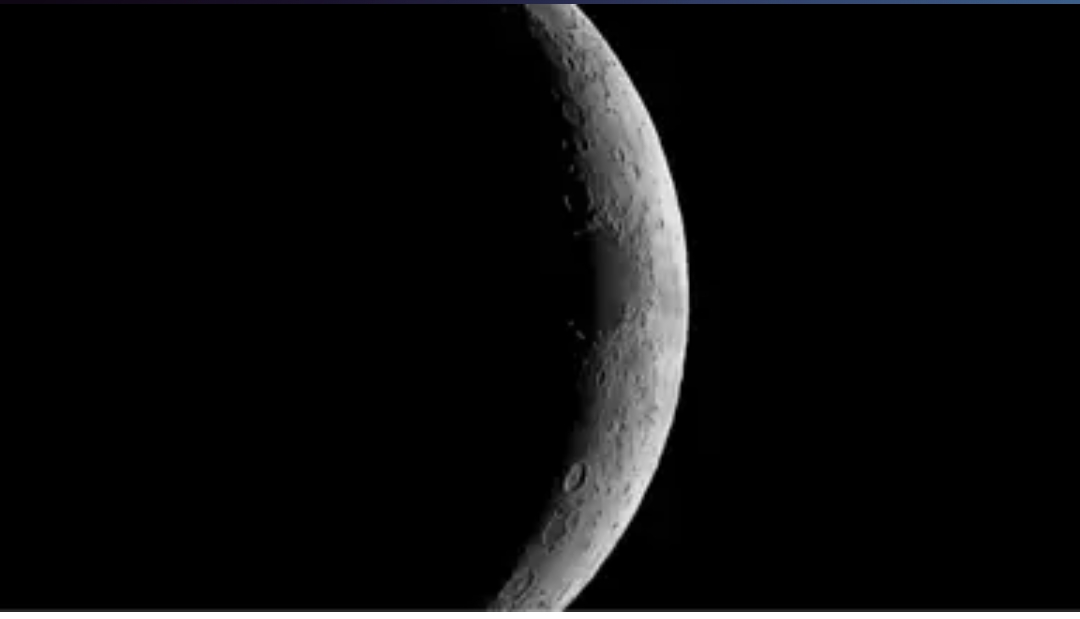
Unveiling the Moon’s Hidden Secrets: Ingo Swann’s Alleged Encounter with an Alien Civilization
In the 1970s, as the world embraced the rise of New Age spiritualism, the U.S. government quietly ventured into the realm of the paranormal. Among the most intriguing and controversial projects was the CIA’s classified initiative, Project Stargate, which explored the potential of psychic phenomena for intelligence purposes. At the heart of this enigmatic program was Ingo Swann, a gifted clairvoyant who claimed to have peered into the cosmos and uncovered something extraordinary: an alien civilization thriving on the dark side of the Moon. His revelations, detailed in his 1998 book Penetration: The Question of Extraterrestrial and Human Telepathy, raise profound questions about extraterrestrial life, government secrecy, and the limits of human perception.
Born in Colorado in 1933, Ingo Swann emerged as a prominent figure in the burgeoning field of psychic research during the 1970s. His alleged ability to engage in “remote viewing”—a process where individuals claim to visualize distant locations or events using only their minds—caught the attention of government agencies eager to harness unconventional methods for intelligence gathering. Swann was recruited by the CIA for Project Stargate, a secretive program that employed psychics to explore phenomena beyond the reach of traditional espionage. Sworn to secrecy, Swann was forbidden from disclosing details of his work for at least a decade, a vow he upheld until the release of his tell-all book.

According to Swann, his most astonishing assignment came in February 1975, when he received a cryptic call from Washington, D.C. A mysterious government agent, known only as “Mr. Axelrod,” summoned him to participate in a highly confidential mission. Swann described being blindfolded, placed in a helicopter, and transported to an underground facility. There, he received an extraordinary directive: to use his remote viewing abilities to explore the far side of the Moon, often referred to as the “dark side” due to its perpetual invisibility from Earth. This region, approximately 238,000 miles away, has long been a source of fascination and speculation, shrouded in mystery due to its inaccessibility to direct observation.
What Swann claimed to have witnessed during his psychic journey was nothing short of astounding. In vivid detail, he described encountering an alien civilization on the lunar surface. “I found towers, machinery, lights of different colors, strange-looking buildings,” he wrote in Penetration. He also observed bridges with unclear purposes and domes of varying sizes, suggesting a sophisticated infrastructure. Most strikingly, Swann reported seeing humanoid figures—apparently male and unclothed—engaged in mining activities within the Moon’s craters. In a chilling moment, he claimed that two of these beings seemed to detect his psychic presence, pointing in his direction as if aware of his observation. “How could they do that… unless… they have some kind of high psychic perceptions, too?” Swann pondered, hinting at the possibility that these extraterrestrials possessed advanced mental abilities.
Upon returning from his psychic expedition, Swann shared his findings with Mr. Axelrod. His curiosity piqued, he pressed the agent for answers: had the U.S. government already made contact with these lunar inhabitants? Swann speculated that the aliens had warned authorities to stay away, prompting the government to resort to psychic methods for reconnaissance. Mr. Axelrod’s response was cryptic: Swann’s assumptions were “approximately correct… but not completely so,” leaving the truth tantalizingly ambiguous.
Swann’s claims, published decades after his alleged lunar vision, have fueled intense debate among conspiracy theorists, UFO enthusiasts, and skeptics. Project Stargate, declassified in the 1990s, confirmed the CIA’s exploration of remote viewing, lending some credibility to Swann’s involvement with the agency. However, his specific assertions about an alien civilization remain unverified, dismissed by many as speculative fiction. Critics argue that remote viewing, while studied by the government, produced inconsistent results and lacked scientific rigor. Others point to the lack of physical evidence supporting Swann’s lunar observations, noting that subsequent lunar missions, such as those by NASA’s Lunar Reconnaissance Orbiter, have found no signs of artificial structures or extraterrestrial activity.
Yet, Swann’s account resonates with those who believe the government conceals evidence of extraterrestrial life. The dark side of the Moon, perpetually hidden from Earth’s view, is a natural focal point for such theories. Its inaccessibility fuels speculation about what might lie beyond our gaze, from secret bases to alien colonies. Swann’s detailed descriptions of towers, domes, and mining operations align with other unverified claims, such as those from alleged Area 51 whistleblowers or conspiracy theorists challenging the authenticity of the Apollo moon landings. For believers, Swann’s story is a tantalizing glimpse into a hidden reality, suppressed by powerful forces.
The broader context of Project Stargate adds another layer of intrigue. Launched during the Cold War, the program reflected the U.S. government’s willingness to explore unconventional methods to gain an edge over adversaries. Remote viewing was seen as a potential tool for spying on inaccessible locations, from Soviet military bases to, apparently, extraterrestrial realms. Swann was not the only psychic involved; others, such as Pat Price and Russell Targ, also contributed to the program’s experiments. While some declassified reports suggest occasional successes—such as accurate descriptions of remote sites—the program’s overall efficacy remains debated. Project Stargate was officially terminated in 1995, with the CIA concluding that remote viewing offered little practical value.

Swann’s lunar vision also intersects with other mysterious narratives. For instance, Buzz Aldrin, the second man to walk on the Moon, faced accusations from conspiracy theorists that the Apollo missions were staged. Aldrin’s vehement rejection of these claims, including a physical altercation with a skeptic, underscores the contentious nature of lunar lore. Similarly, eerie cases like that of the “Lead Masks” incident—where two Brazilian men, described as alien enthusiasts, were found dead under bizarre circumstances—fuel speculation about extraterrestrial cover-ups. These stories, while unrelated to Swann’s claims, contribute to a broader tapestry of intrigue surrounding aliens and government secrecy.
Swann’s death in 2013 left many questions unanswered, but his book continues to captivate readers. Penetration not only recounts his lunar experience but also explores the intersection of human consciousness and extraterrestrial phenomena. Swann speculated that telepathy might bridge humanity and alien civilizations, a concept that resonates with New Age philosophies. His work challenges readers to consider whether psychic abilities could unlock cosmic truths or if his visions were merely products of an overactive imagination.
The enduring allure of Swann’s story lies in its blend of science, spirituality, and secrecy. Whether one views his claims as credible or fantastical, they tap into humanity’s fascination with the unknown. The dark side of the Moon, with its unseen landscapes, remains a potent symbol of mystery. Could an alien civilization truly exist there, hidden from our telescopes and probes? Or was Swann’s vision a vivid hallucination, shaped by the era’s obsession with the paranormal? Without definitive evidence, the truth remains elusive.
As we continue to explore the cosmos, from lunar missions to searches for extraterrestrial intelligence, Swann’s account serves as a reminder of the limits of our knowledge. The CIA’s willingness to fund Project Stargate reflects an openness to unconventional ideas, even if the results were inconclusive. For now, the dark side of the Moon remains a blank canvas for speculation, where the boundaries between fact and fiction blur. Ingo Swann’s extraordinary claims, whether truth or fantasy, invite us to ponder the possibilities that lie just beyond our reach.